
The LEAD Framework
The LEAD Framework
LEAD
Leadership & Engagement for Improved Accountability & Delivery — is a structured, evidence-based approach to strengthening health systems from the inside out. It has been tested, refined, and validated across multiple countries and health contexts.
LEAD
Leadership & Engagement for Improved Accountability & Delivery — is a structured, evidence-based approach to strengthening health systems from the inside out. It has been tested, refined, and validated across multiple countries and health contexts.
L — Leadership
Building distributed leadership at every level — and across all levels
E — Engagement
Bringing front-line voices, communities, and managers into the same conversation
A — Accountability
Creating shared responsibility and ownership for outcomes
D —
Delivery
Translating plans and knowledge into measurable improvements in services
L — Leadership
Building distributed leadership at every level — and across all levels
E — Engagement
Bringing front-line voices, communities, and managers into the same conversation
A — Accountability
Creating shared responsibility and ownership for outcomes
D —
Delivery
Translating plans and knowledge into measurable improvements in services
Action-oriented Teams
Cross-functional task teams are formed at district and provincial level — bringing together nurses, doctors, lab technicians, pharmacists, administrators, and community leaders. Empowered with authority and resources to address local challenges, they deliver results.

Annual plans
National and provincial workshops identify challenges, set targets, affirm managerial support. Teams implement plans during the year, supported by coaching and peer check-ins. Scheduled reviews capture learning and feed into the next cycle.
Peer learning & exchange
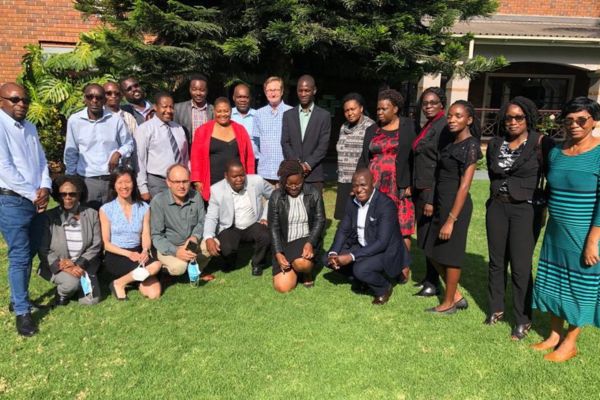
Teams share what works and what doesn't across districts and countries. This peers to peer learning spreads solutions faster and more durably than top-down training.
Informed Measurement
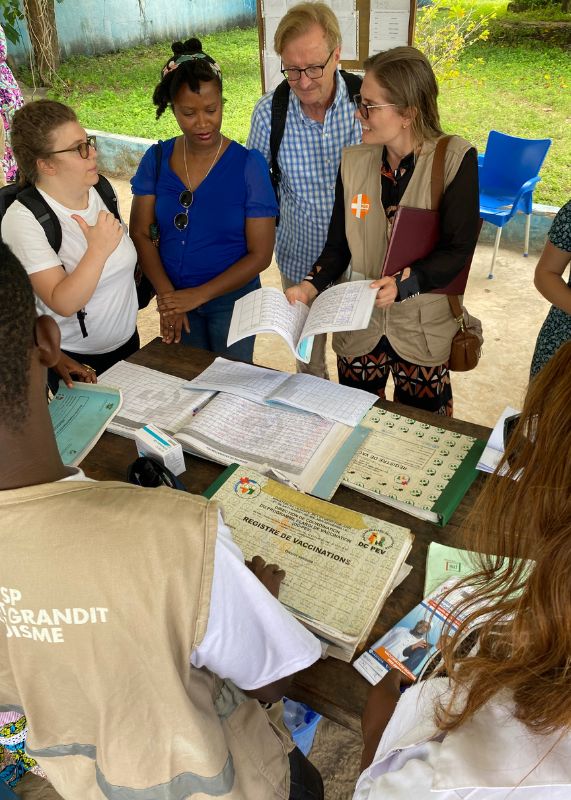
Every LEAD cycle includes a measurement system. Data is used in real time to adjust plans . Teams learn to collect, interpret, and act on information.

Capacity Built To Last
A one-year training in change leadership leads to a post-graduate certification. Graduates become facilitators themselves, spreading the approach within and beyond their own countries.

Increased connections
Rather than siloed programmes, LEAD connects across roles, levels, and services. When a malaria team improves its supply chain, that improvement ripples into maternal and child health, HIV, and vaccinations.
Participatory Action Research in the LEAD Framework
Participatory Action Research (PAR) is one of the foundational influences underpinning the LEAD Framework. It is both a methodology for inquiry and a process for collective learning and action. Rather than relying on external experts to diagnose problems and prescribe solutions, PAR actively involves those most closely connected to service delivery—including frontline health workers, managers, community representatives, and other stakeholders—in identifying challenges, analysing their causes, implementing improvements, and evaluating outcomes. In LEAD, the people closest to operational realities are regarded as the key sources of knowledge and innovation.
The LEAD Framework applies PAR through an iterative cycle of reflection, action, learning, and adaptation. Stakeholders come together to identify and prioritise operational challenges, explore their root causes, develop locally appropriate solutions, and monitor progress over time. This process generates practical improvements while simultaneously building collective leadership, problem-solving, and decision-making capacity throughout the health system.
Quality Improvement and Quality Management in the LEAD Framework
Within the LEAD Framework, Quality Improvement (QI) and Quality Management (QM) are understood as complementary approaches for strengthening health system performance and service delivery. QI focuses on continuous learning and improvement through systems thinking, root cause analysis, measurement, teamwork, and iterative cycles of planning, implementation, review, and adaptation. QM provides the organisational structures that make such improvement sustainable, including leadership and governance, performance measurement, workforce development, accountability systems, community involvement, and mechanisms for learning and knowledge sharing.
LEAD integrates these approaches with participative methods that actively engage frontline workers, managers, communities, and other stakeholders in identifying challenges and designing solutions. Quality is therefore viewed not simply as compliance with standards, but as a collective capacity to learn, innovate, and improve operational performance. Those closest to service delivery are empowered to analyse local challenges, develop contextually relevant responses, measure progress, and embed successful practices into routine operations.
Malaria Elimination Initiative Toolkit
The LEAD Framework forms part of a suite of tools developed and made publicly available by the University of California, San Francisco’s Malaria Elimination Initiative (MEI). This toolkit provides evidence-based, user-friendly tools and approaches to strengthen national malaria programs and empower district-level leadership to understand and overcome malaria control and elimination challenges.
Situation
Assessment
What are the drivers of transmission? What is the readiness of the health system for elimination and what are the gaps?
Tailored
response
What actions should the program take based on identified and characterized gaps?
Program management
and sustainability
How does the program effectively manage and fund malaria elimination?
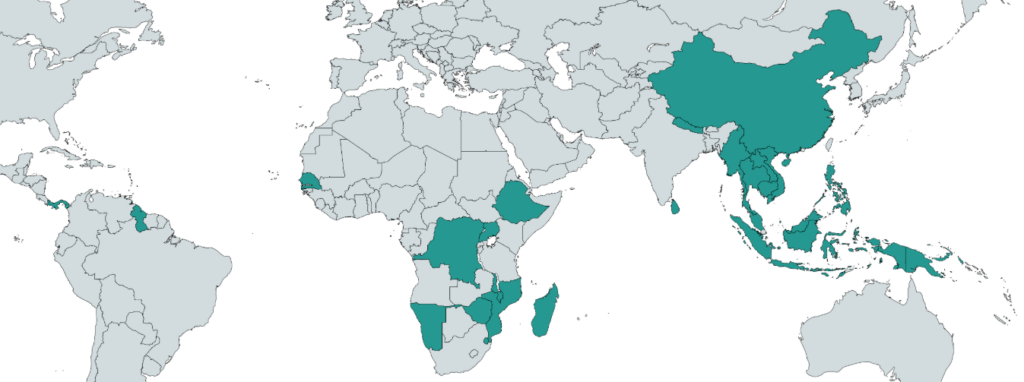
The MEI toolkit has been used successfully in at least 25 malaria endemic countries, leading to changes in malaria strategy, planning, and policy. Following initial technical assistance and capacity strengthening from the MEI, tools have been adopted and deployed directly by malaria programs and their partners, and some tools have been adapted and/or applied to other disease areas, including HIV and neglected tropical diseases.
The LEAD User Guide forms part of the MEI Toolkit. It provides a practical step-by-step resource for applying the LEAD Framework. Designed for health program managers, practitioners, and partners, it supports collaborative problem-solving, stronger leadership, and more effective service delivery.
Download a copy of the Guide below:
Annex 1 introduction - to - the - lead - process.
Annex 2 initial - workshop - program. The Nature Of Challenges
Annex 3a challenge-opportunity-identification
Annex 3b-shifting-management-and-leadership
Annex 4b-active-listening For Facts and Feelings
Annex 5 Solution Generation Challenge
Annex 6b_ Sample Action Plan
Annex 7b_ Collaborative Consulting World
lead-factsheet
Annex 3c--challenge-opportunity-prioritization
4c_ Key Managerial Challenges in Moving from Control to Elimination
Annex 6 Managing Resistance to Change
Annex 7 - moneval -f ollow up - workshop
Annex 7c_ Follow-Up Qual Feedback Form
Core thematic elements of the LEAD Framework are as follows:
Action-oriented Teams
Cross-functional task teams are formed at district and provincial level — bringing together nurses, doctors, lab technicians, pharmacists, administrators, and community leaders. Empowered with authority and resources to address local challenges, they deliver results.
Annual plans
National and provincial workshops identify challenges, set targets, affirm managerial support. Teams implement plans during the year, supported by coaching and peer check-ins. Scheduled reviews capture learning and feed into the next cycle.
Peer learning & exchange
Teams share what works and what doesn't across districts and countries. This peer to peer learning spreads solutions faster and more durably than top-down training.
Informed Measurement
Every LEAD cycle includes a measurement system. Data is used in real time to adjust plans. Teams learn to collect, interpret, and act on information.
Capacity Built To Last
A one-year training in change leadership leads to a post-graduate certification. Graduates become facilitators themselves, spreading the approach within and beyond their own countries.
Increased connections
Rather than siloed programmes, LEAD connects across roles, levels, and services. When a malaria team improves its supply chain, that improvement ripples into maternal and child health, HIV, and vaccinations.